

 Back to News
May 5, 2026
NSSF PROFILE Q&A: Governor Kelly Armstrong (R-N.D.)
Editor’s Note: We are pleased to post the latest of our occasional Q&A features with an elected official who supports hunting and the shooting sports. NSSF thanks North Dakota Governor Kelly Armstrong for speaking with us about his staunch support for the Second Amendment, hunting and recreational target shooting and the importance of the firearm and ammunition industry to his constituents in the Peace Garden State.
Governor Armstrong assumed office in December 2024. Prior to his election as North Dakota’s top executive, Gov. Armstrong served for nearly three terms in the U.S. Congress as North Dakota’s at-large Member in the U.S. House of Representatives. While serving in Congress, Gov. Armstrong received A+ ratings on NSSF’s Congressional Report Card in both 2022 and 2024, signifying his leadership on firearm and ammunition industry priorities that went above and beyond bill cosponsorships.
1) Who introduced you to hunting and the shooting sports, and why are hunting and the shooting sports important to you in your job as North Dakota’s top executive?
My dad. It started when I was 9 years old and shot a raccoon with my bow. I have since hunted all over the world for everything you can think of, with a bow and a rifle.
North Dakota is a hidden treasure for hunters and outdoors enthusiasts. We may not be the best for any one thing [for hunters], but we’re kind of the best for everything: pheasants, grouse, partridge, whitetail deer, mule deer, ducks, geese and tons of predators.
Hunting and shooting sports aren’t just a way of life in North Dakota, they’re also an important tool for attracting new residents and workers to our state and retaining those who already live here — especially our young people.
 2) What was your most recent shooting sports or hunting experience?
In North Dakota, it was last fall when I shot the nicest whitetail I’ve ever killed. But what really made it special was that my good friend’s 9-year-old son was in the blind with me when I shot the buck with my bow. The same kid, Jennings, was also with me when I shot my moose in 2022, so he’s kind of my good luck charm and a good hunter in his own right.
Outside of North Dakota, I got dry holed on a bighorn last year in the mountains in Canada, but I’ll be making another run at it to complete the grand slam (Dall sheep, Stone sheep, Rocky Mountain bighorn, Desert bighorn). I live in a very flat state, so I’ve been drawn to the mountains a lot. I’m going to continue with the sheep hunting as long as my body will let me and continue to go see my friends in Africa as much as possible.
3) Describe your favorite shooting sports or hunting activity.
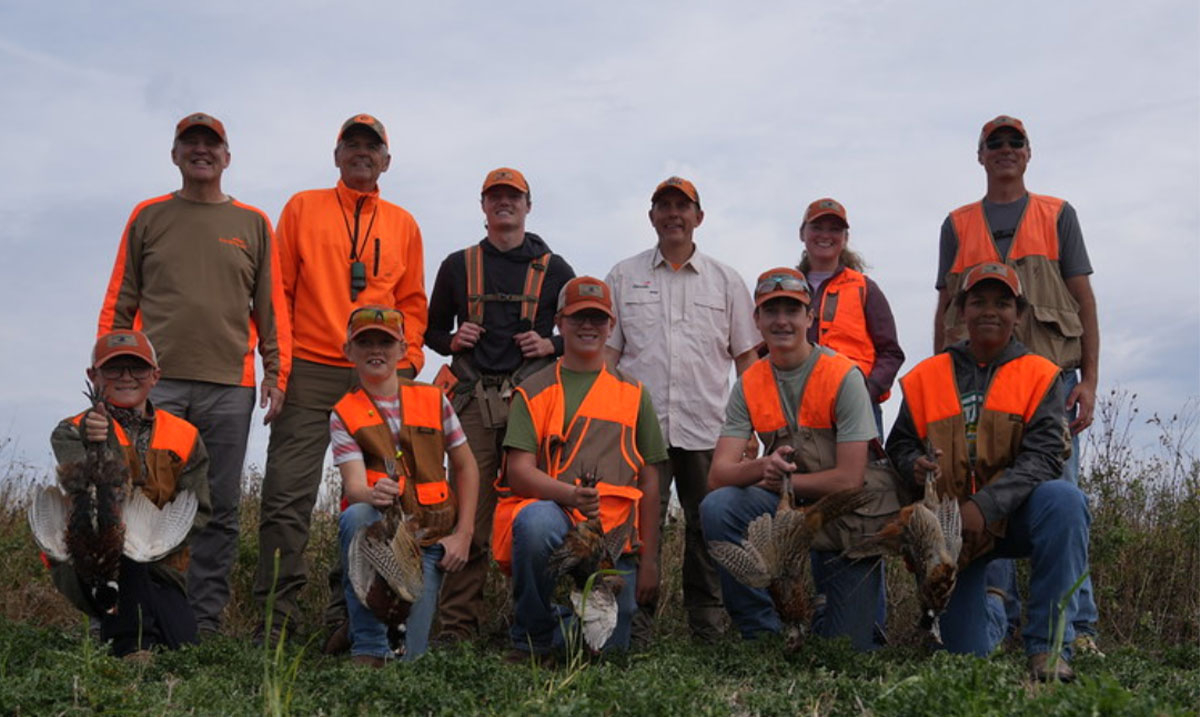
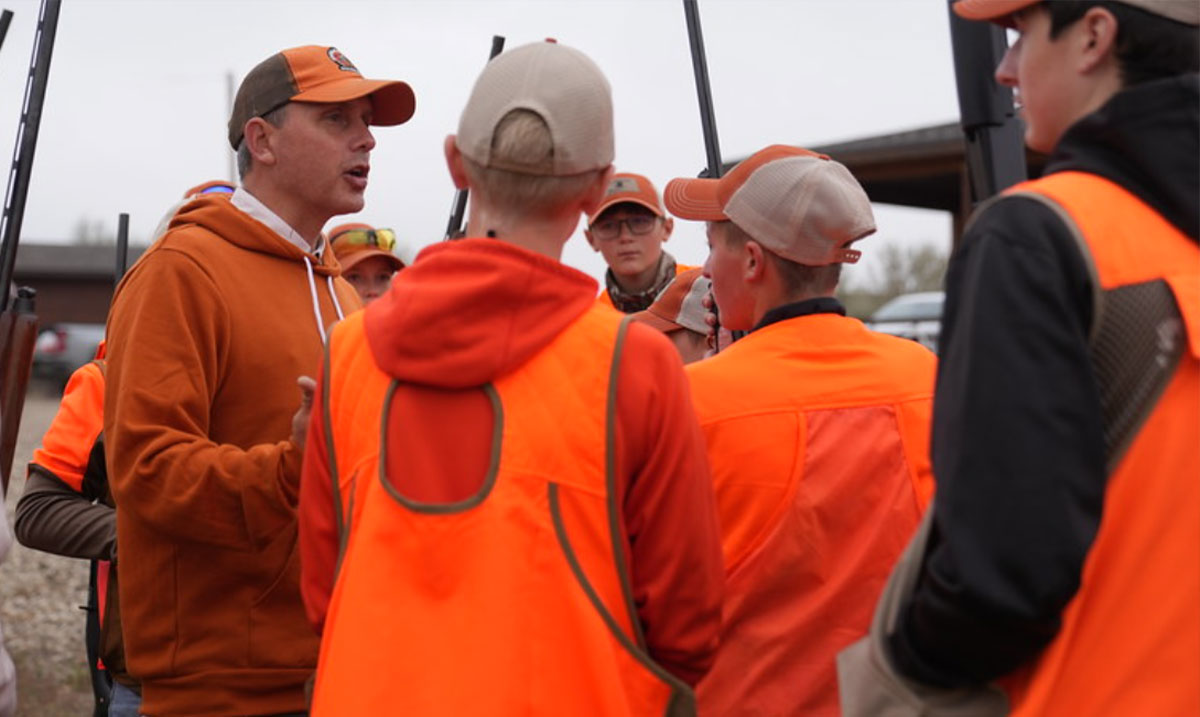
My favorite is still pheasant hunting in southwest North Dakota. I used to guide for a buddy back in the day, and I love training and running bird dogs. Last fall, I had the pleasure of walking some of those same fields with more than a dozen young hunters to kick off pheasant season with our first Governors’ Youth Pheasant Hunt.
I enjoy taking other people hunting as much or more than I enjoy hunting myself — especially kids, because there’s nothing like the excitement on a kid’s face when they shoot their first bird or their first deer. It’s awesome to be part of passing that tradition on to the next generation of North Dakotans.
 4) Which piece of pending legislation in North Dakota related to conservation, hunting and the firearm industry is particularly important to you and why? Or what is your next priority for protecting the Second Amendment rights of North Dakotans?
After the oil business really ramped up in North Dakota in the late 2000s, one of the first things we did was set up an Outdoor Heritage Fund, using oil tax revenue to support conservation practices and preserve wildlife habitat. Habitat loss is a huge problem for all of us, and hunting access is also an ongoing challenge.
So, in January, we launched the Governor’s Legacy Soil Health and Habitat Program. We’re trying to improve soil health and wildlife habitat on marginally productive cropland through a number of incentives, using money from the Outdoor Heritage Fund and matching dollars from our partners. The goal is to help North Dakota farmers boost their productivity and resilience with perennial grass cover and create much-needed habitat and access. It’s a win-win for everyone, and the rollout went even better than expected, so we’re looking for opportunities to sustain and grow the program.
5) What do you see as the challenges and opportunities, or possibly more broadly the country, for hunters and shooting sports enthusiasts in your state?
I think our Number One challenge and responsibility as sportsmen is passing it on to the next generation of hunters. Take a kid hunting.
I always say that hunters are the best conservationists in the world, and farmers are a very close second. And being able to work with landowners instead of going after them is hugely important to the long-term success of this. If you don’t give them a financial incentive to protect habitat and wildlife, then you will see exactly what we know happens, which is poaching and the degradation of habitat. The better approach is working with locals, working with other governments, to create a means for the entire species to thrive. And one of the single most impactful ways to do that is through good, sustainable hunting laws and hunting practices.
You may also be interested in:
OCC Gives Debanked Firearm Businesses a New Path to Hold Banks Accountable
Senate Confirms ATF Director Cekada, Signaling New Era of Fair Enforcement and 2A Respect
Categories: BP Item, Education, Government Relations, Top Stories
25650