

 Back to News
March 10, 2026
The Trace Targets the Firearm Industry for Being … an Industry
The Trace recently hosted a webinar event called “Investigating the Gun Industry” for other gun control activists to listen in on their “clandestine investigative work.” Welcoming viewers with a declaration that their work is guided by “independent journalism,” “transparency” and “accountability,” it didn’t take long for the true picture to snap into focus.
From the opening remarks, the framing was unmistakable. Firearms were described not primarily as tools owned and used responsibly by citizens for self-defense, recreational sport shooting and hunting, but as “products” sold by an industry “in search of profits.” The line is not just a description, it’s a narrative device reinforcing the audience to see the Second Amendment less as a civil right and more as a consumer marketplace “problem” that can be “fixed” by targeting firearm manufacturers, retailers and the trade association that represents them.
That’s a convenient posture for an outlet seeded with funding tied to the gun control movement. The Trace claims to be “editorially independent,” but when a newsroom is funded by and built around a single political issue with the backing of major gun control activists, it’s fair — necessary, even — to scrutinize how it frames the facts. After all, The Trace is headed by John Feinblatt, who also heads Everytown for Gun Safety and once served as a senior advisor to antigun billionaire Michael Bloomberg when he was New York City’s mayor. Feinblatt is the principal officer listed on tax filings for The Trace. Everytown, of course, is a gun control organization that wants to see lawful firearm ownership eliminated in America.
‘Profit vs. Public Health’ Tell
Senior writer Mike Spies put the core premise on the record, revealing exactly what this “investigation” is meant to accomplish. Spies argued that The Trace spent years focusing on the gun lobby but hadn’t “pierced the veil” of the gun industry. He declared that the “industry and the companies” are responsible for making the “products that ultimately allow for mass shootings and other forms … of gun violence,” and insisted it is “essential” to look at industries where there is a tension between “profits and public health” and even “political stability,” asking when those were “knowingly … sacrificed to fuel profit.”
That isn’t an open-ended inquiry, that is a prosecutorial premise.
Spies — and his activist writings — treats lawful firearm manufactures as morally responsible for the criminal misuse of their legally made and lawfully sold products. It also injects a dramatic insinuation about “political stability,” as if the lawful exercise of the Second Amendment is itself destabilizing. That’s not analysis; that’s antigun advocacy language. Once that premise is accepted, everything else in The Trace’s event falls neatly into place for them.
‘Secrets,’ ‘Immunity’ and Lawfare
The panel returned repeatedly to the idea that the gun industry is “different,” with special attention to the legal protections and the concept of “immunity.” This is where the audience is encouraged to see basic guardrails as suspicious.
The truth is simpler than the spin. For decades, gun control activists have tried to achieve policy outcomes through “lawfare” — abusing the judicial system to punish lawful businesses for crimes committed by unaffiliated third parties. That would be like suing Ford for the harm caused by drunk drivers. When you can’t persuade legislatures, comprised as duly elected representatives, the workaround is to make lawful commerce so expensive, risky and reputationally toxic that it collapses.
The goal is use the courts to achieve what can’t be done legislatively. The Trace and the gun control machine that funds it want to change the rules by changing who gets blamed.
No Surprise: No Mention of Firearm Industry Safety Initiatives
The Trace wants viewers to accept that the firearm industry is an obstacle to safety. That claim collapses the moment you acknowledge what the industry — and NSSF in particular — has built and sustained for decades; practical, nationwide safety initiatives designed to prevent unauthorized access, deter illegal purchases and save lives. The firearm industry does have Real Solutions® to help make communities safer.
Project ChildSafe® is one of the clearest examples. NSSF launched Project ChildSafe in 1999 as a nationwide firearm safety education effort and has partnered with more than 50,000 law enforcement agencies to distribute more than 41 million free firearm safety kits, including cable locks, to encourage secure storage and reduce accidents, theft and misuse.
FixNICS® is another. If critics are serious about keeping firearms out of the hands of those who cannot legally possess them, the FBI’s National Instant Criminal Background System (NICS) must contain the accurate information. NSSF’s FixNICS campaign has strengthened NICS through submission of all disqualifying records, and the bipartisan Fix NICS Act signed in 2018 aimed to improve those reporting processes. Led by NSSF, 16 states have passed their own FixNICS laws to improve background checks.
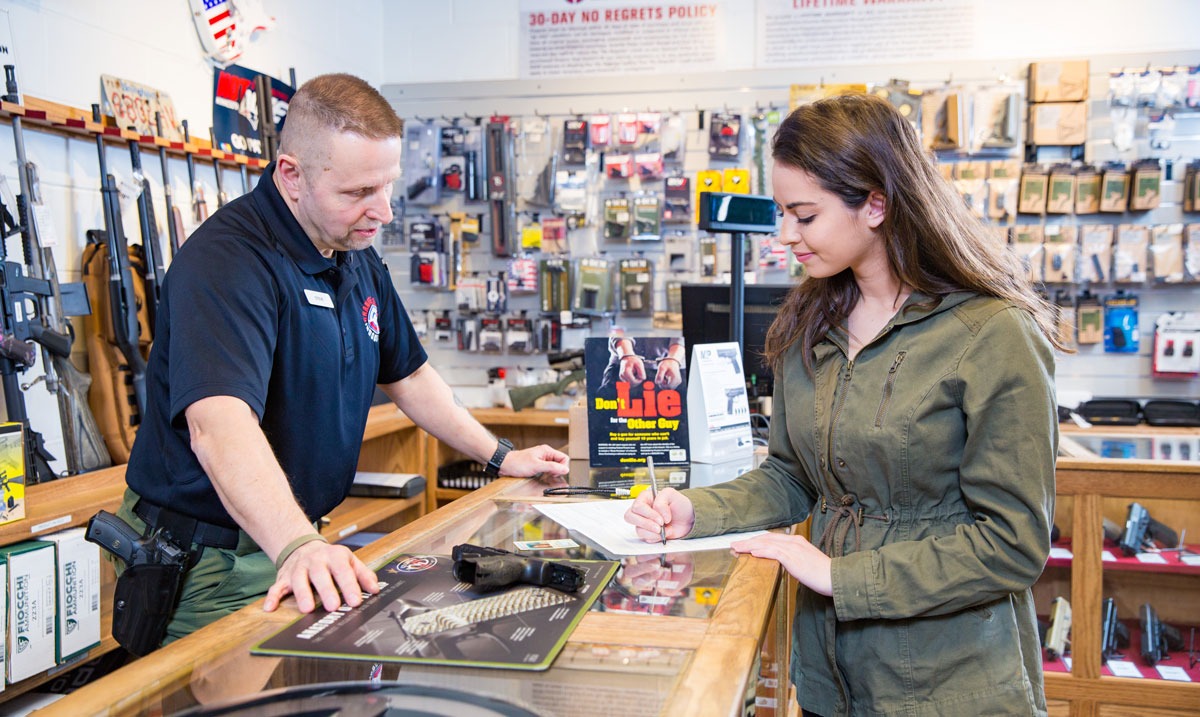
Don’t Lie for the Other Guy™ is a long-running cooperative effort between NSSF, the Bureau of Alcohol, Tobacco, Firearms and Explosives (ATF) and the Department of Justice (DOJ) focused on preventing illegal straw purchases — the felony scheme where someone buys a firearm for a person who cannot legally own one.
NSSF also leads the firearm industry’s ATF partner program, Operation Secure Store®, which aims to improve security at firearm retailers to prevent the rash of smash-and-grab burglaries and robberies. That includes proactively educating firearm retailers in identifying and quantifying vulnerabilities and risks associated with the business of firearm commerce. NSSF also matches ATF reward offers up to $5,000 for information leading to the arrest and conviction of criminals victimizing firearm retailers.
And NSSF has partnered with the American Foundation for Suicide Prevention and the U.S. Department of Veterans Affairs with the suicide prevention “Brave Conversation” program, offering toolkits and training resources to help firearm retailers, ranges and communities recognize risk, encourage secure storage and connect people to help during crisis moments. These partnerships exist because serious people recognize the truth: reducing suicides requires empathy, access to care and practical steps that can save lives — without demonizing responsible gun owners or creating a fear that would prevent someone from asking for help.
The Trace knows of these firearm safety initiatives and chose not to discuss them because they complicate their committed narrative.
Falling Short
By the time the webinar concluded, the audience was left with a tiny, and false, narrative: the firearm industry is suspect, the trade group is secretive, legal protections are shameful and “public health” demands more pressure on lawful commerce.
But the central fact never changes. Criminals are responsible for violent crime. Not the manufacturer that sold a legal product into a tightly regulated system. Not the retailer who followed the law and ran the background check. Not the millions of Americans who own firearms responsibly for hunting, shooting sports or self-protection.
If The Trace wants to get into journalism, it should follow the facts wherever they lead, including toward programs that demonstrably improve safety outcomes and toward reforms that target criminals instead of scapegoating lawful businesses. When an editorial staff starts from the assumption that lawful firearm commerce is culpable, it isn’t investigating — it’s campaigning.
You may also be interested in:
New Mexico’s 2026 Gun Control Push Stalled, but the Overreach Will Return
Categories: BP Item, Featured, Government Relations, Top Stories
25650