





Welcome to Project CyberSafe™
Receive Timely Updates
Stay informed about cybersecurity awareness, threats, and educational initiatives for the firearm industry. Opt-in for exclusive updates, resources, and expert insights to empower your business in a secure environment.
OPT INEducation/Webinars

and How to Best Defend
With nearly four decades as a computer security consultant, Roger Grimes is an authoritative resource in helping businesses prevent hacker and malware attacks. Watch his fast-paced SHOT University™ session at 2026 SHOT Show® and gain awareness on social engineering’s effectiveness, how deepfakes succeed and your best defenses against hackers.
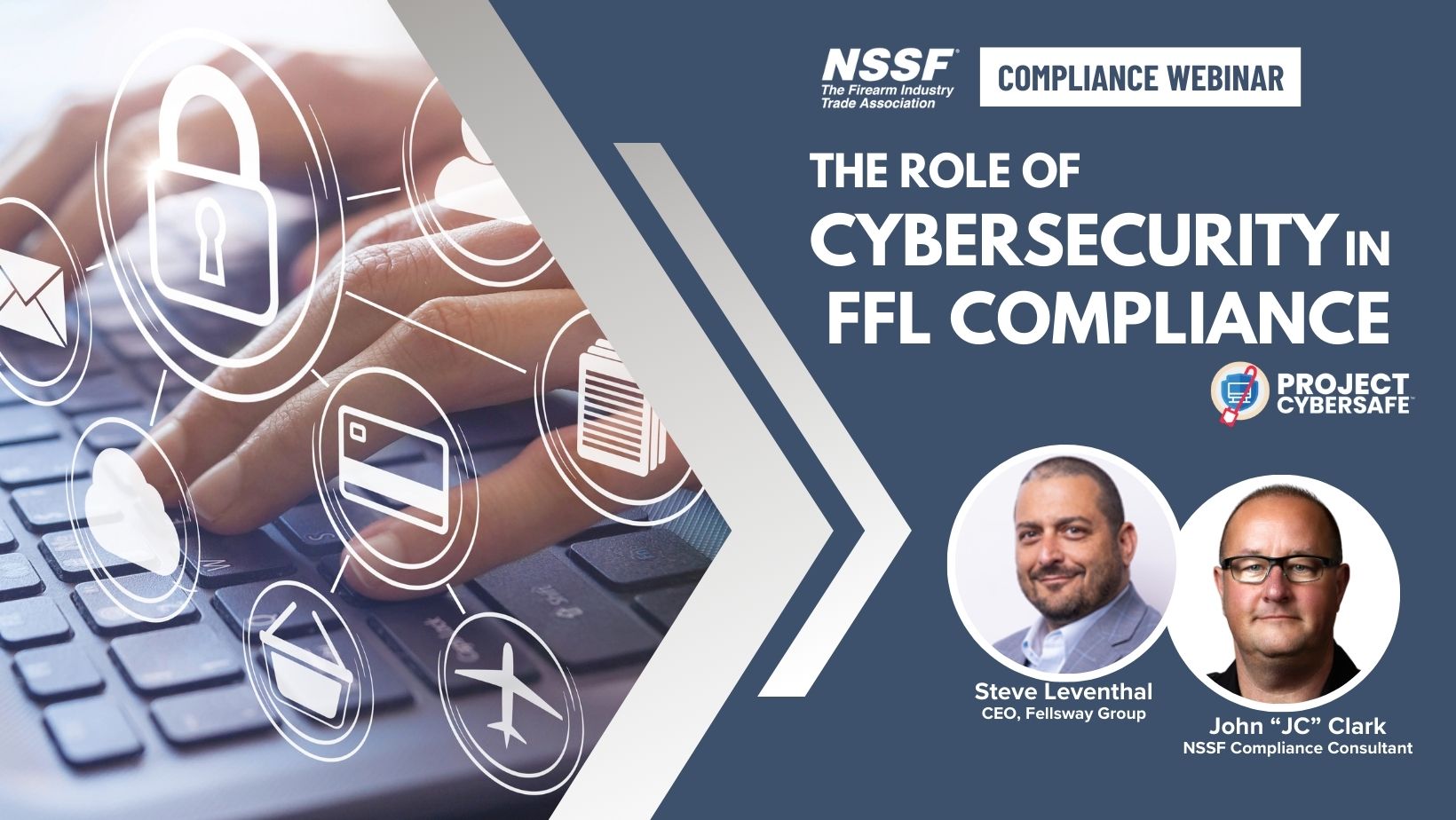
Dive into the intersection of cybersecurity and FFL compliance with experts Steve Leventhal and John “JC” Clark. Learn about essential regulatory requirements, identify potential threats, and discover effective strategies to protect sensitive data. Don’t miss this chance to enhance safety in the firearms industry!

A recent SHOT University™ education session, James McQuiggan from KnowBe4, highlighted the profound societal impacts of AI, particularly in the firearm industry, and emphasized the importance of understanding AI to identify and defend against advanced social engineering attacks.
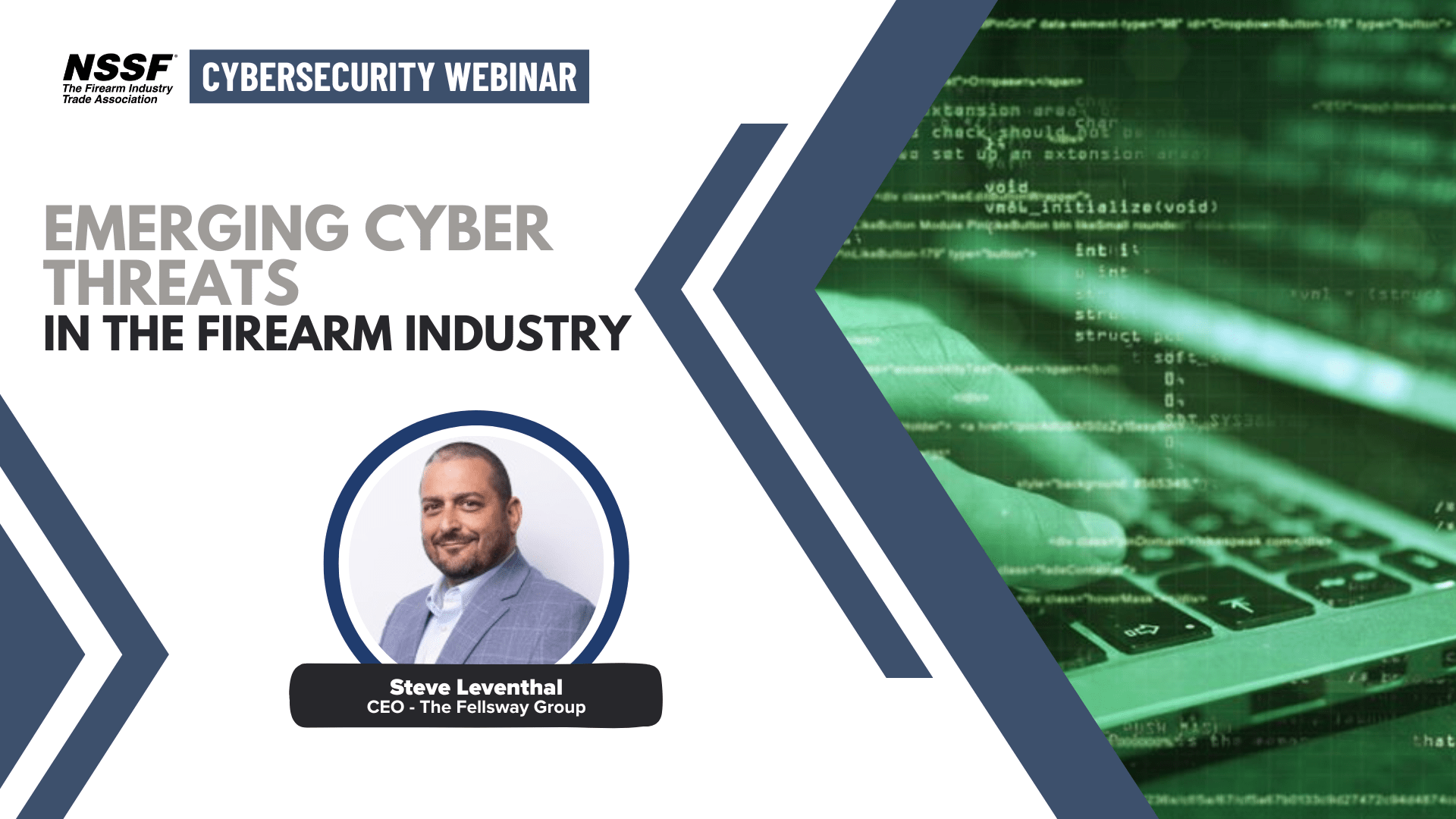
In this on-demand webinar, Steve Leventhal, CEO of The Fellsway Group, discusses critical cybersecurity issues and emphasizes key measures for enhancing cybersecurity, such as employee training and securing e-commerce platforms.
Additional Education
View the full catalog of recorded webinars that NSSF has conducted with our partners to make our industry’s members aware of cybersecurity threats and the steps they can take to mitigate against exposure. NSSF Members have exclusive early access to some of these resources.
Cybersecurity Tips from NSSF
CyberSafe BP Tips
Away from office advice
Finding yourself involved in a cybersecurity incident while on vacation or traveling can put your company at risk if you don’t have the ability to communicate the incident to your Incident Response Team. If you don’t have strong communication / connectivity, your best bet is to just not work. If you need to work in a situation where connectivity is not strong, please take no chances on unexpected or unknown communications.
Going to the Source
Cybercriminals are continuing to bombard your employees with notifications through text messages and emails. They are counting on notification fatigue getting the best of your employees so they can gain access to your company’s data. Going directly to the source website can help prevent clicking a bad URL.
Mobile Phishing Attacks
Mobile phishing attacks have quickly become a leading security threat with the second most common mobile threat being malware delivered via social engineering. To limit the chance of your business experiencing a cybersecurity incident, it is important to keep your employees aware of the newest attacks being used by cybercriminals. Finding the security awareness training that is right for your company will help make your business more secure.
Multi-factor Authentication
Multi-factor Authentication has become a non-negotiable online security practice. Older methods like SMS-based MFA will decline in favor of more secure options, such as authenticator apps.
Enabling MFA wherever possible should be a focus for your business.
New Threat Trends
Cybercriminals are setting up legitimate, paid for DocuSign accounts and sending phony invoices. Since the messages come from a legitimate service, they’re more likely to bypass security filters and fool human users. Think before you click, “Were you expecting this?” Delete And Move On! Having a Security Awareness Training program can help keep your employees informed on the newest threats impacting companies.
New Threat Trends
The trend toward cyber criminals using images as text instead of actual text to bypass text based security filters is increasing. Malicious URLs are the top technique used in these email attacks. Thinking Before You Click, in the body of the message of an email, is an important practice to adopt.
Password Managers
As digital security becomes increasingly important to your business’s success, Password Managers become a vital part of your cybersecurity tool belt. Valuing your online security is vitally important. Password Managers like Dashlane & LastPass provide employees with a safer online experience.
Patching Cadence
Patching cadence should be a risk priority. A regular, timely patching process reduces the window of exposure to known vulnerabilities, limiting opportunities for exploitation and strengthening overall vulnerability management.
Phishing testing training and SCCM
Phishing awareness training and continuous testing help companies improve employee’s ability to recognize and avoid interacting with suspicious content. With threats continuing to evolve, it’s important to have employees engaged and aware of current trends being used by cybercriminals. Your business’s chances of a cyber incident decline the more you test and training.
Project CyberSafe™ Roadmap to Success
Ensuring the security of your business necessitates a comprehensive focus on various aspects of your technology landscape and digital footprint. The Project CyberSafe™ Roadmap to Success serves as an essential guide to evaluate your business’s current cybersecurity posture while identifying opportunities for enhancing protection measures. Download this simple and effective guide to evaluate your business’s cybersecurity posture and identify opportunities to safeguard your practices.
Software Update Best Practices
- 1. Enable automatic software updates whenever possible. This will ensure that software updates are installed as quickly as possible.
- 2. Do not use unsupported or end-of-life software.
- 3. Always visit sites directly rather than clicking on advertisements or email links.
- 4. Avoid using untrusted networks, like public WiFi, when installing software.
CyberSafe Partner Tips
CMMC Phase 2 suspended
On July 13 the Department of War suspended CMMC Phase II, putting third-party C3PAO assessments on hold for a 60-day review. Phase I has not moved: Level 1 and 2 self-assessments, SPRS scores, DFARS 7012 and NIST 800-171 still apply. Without an auditor in the loop, your self-assessment is the only thing between you and a False Claims Act case. Read more about this change from our Project CyberSafe partner Fellsway Group.
Free Tools from KnowBe4
Start building your company’s cybersecurity posture, with these free tools from KnowBe4. Free tools include Phishing testing, Password security, Email security, and Malware simulator tools. Download your free KnowBe4 cybersecurity tools today.
Mobile Phishing Attacks
Mobile phishing attacks have quickly become a leading security threat with the second most common mobile threat being malware delivered via social engineering. To limit the chance of your business experiencing a cybersecurity incident, it is important to keep your employees aware of the newest attacks being used by cybercriminals. Finding the security awareness training that is right for your company will help make your business more secure.
Phishing Kit Abuses Open Graph to Target Social Media Users
By Stu Sjouwerman (KnowBe4)
Researchers at Cyble warn that a phishing kit is abusing the Open Graph (OG) protocol to target social media users.
Software Update Best Practices
- 1. Enable automatic software updates whenever possible. This will ensure that software updates are installed as quickly as possible.
- 2. Do not use unsupported or end-of-life software.
- 3. Always visit sites directly rather than clicking on advertisements or email links.
- 4. Avoid using untrusted networks, like public WiFi, when installing software.
Additional Resources
Every week, NSSF provides a cybersecurity tip in Bullet Points, our flagship newsletter. Opt-in to receive Bullet Points each week and subscribe to our Project CyberSafe newsletter for more in-depth cybersecurity content.

Cybersecurity News
Cyber Security News
Phishing Kit Abuses Open Graph to Target Social Media Users
By Stu Sjouwerman (KnowBe4)
Researchers at Cyble warn that a phishing kit is abusing the Open Graph (OG) protocol to target social media users.
NSSF Partners



Additional Resources
NSSF partners with leading companies in the cybersecurity space to bring critical information to industry members. These partners provide a tremendous knowledgebase to help companies and organizations protect against these threats. Subscribe to our Project CyberSafe newsletter for more in-depth cybersecurity content.